
Introduction
Good vision is easy to take for granted. We read, drive, work, and scroll without giving our eyes much thought, and changes in eyesight often happen so gradually that they are hard to notice day to day.
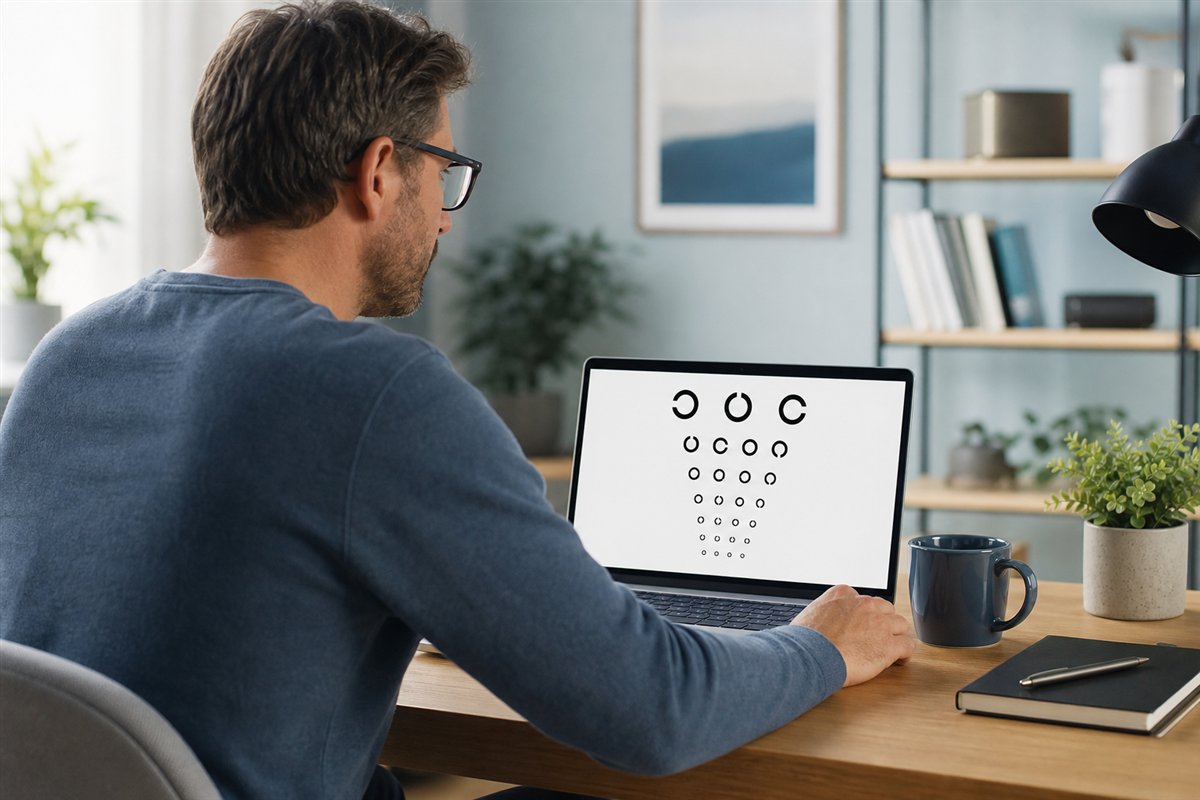
Booking a professional eye exam is the right step whenever you have concerns, but between visits many people simply have no easy way to keep an eye on how their vision is doing. That gap is where quick, at-home vision self-checks can help you stay a little more aware.
Why Eyesight Often Changes Without You Noticing
Vision rarely changes overnight. Instead, small shifts can build up quietly over months or years. Everyday factors that can affect how comfortably you see include:
- Long hours in front of screens
- Reading in poor lighting
- Natural changes that come with age
- Tired or strained eyes
- Differences between your left and right eye
- Reduced contrast or color perception
- Blurring at certain distances
- Simply getting used to how things look
Because these changes are gradual, a periodic self-check can make it easier to notice when something feels different.
A first step, not a diagnosis
An at-home vision check is a way to build awareness of your eyesight between professional visits. It does not diagnose any condition, and it is not a substitute for a full examination by a qualified eye-care professional.
What At-Home Vision Screening Can and Cannot Do
Online vision screening tools are designed to give you a general sense of how you are seeing under everyday conditions. They can be genuinely useful, but it helps to understand their limits:
- They can highlight areas you may want to discuss with a professional
- They can help you track how your vision feels over time
- They can encourage you to book an exam when something changes
- They cannot replace clinical equipment or a professional's judgement
- They cannot diagnose, treat, or rule out any eye condition
Used with that understanding, a screening tool becomes a helpful prompt rather than a source of medical answers.
What People Look for in a Vision Screening Tool
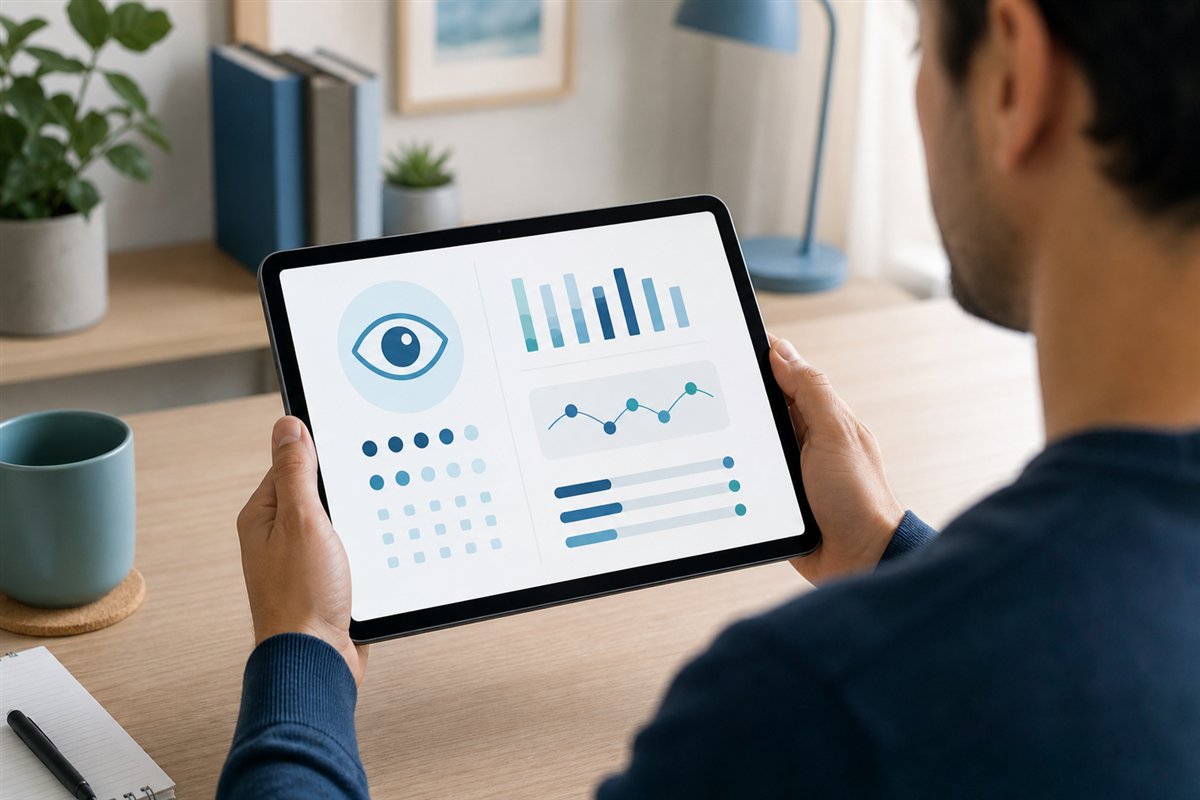
Rather than juggling separate apps or guessing at how their eyes are doing, many people prefer a single, easy-to-use tool that guides them through each check. Features that are commonly valued include:
- Clear, step-by-step guidance
- A range of different checks
- An easy-to-read results summary
- The ability to track results over time
- Clear information about where a specialist directory is available
- Something that works on the devices they already own
- Respect for their privacy
Keeping everything in one place makes it far more likely that a self-check actually becomes a regular habit.
One Option Worth Exploring
One option worth exploring is Spect-IT, an online vision screening platform created to help people run guided eyesight self-checks from home.
According to the provider, Spect-IT runs in a web browser and includes checks covering areas such as visual clarity, color perception, and contrast. Some checks may request camera access for positioning guidance. Device compatibility and results can vary.
Spect-IT's homepage labels initial access as free, but its current test flow requests an email address and consent before testing. Saved history, comparisons, and premium analytics may require additional account access or provider terms. Its specialist directory currently covers South Africa.
Who May Find It Useful
An at-home vision screening tool may suit adults who want an informational check between professional exams. It should not be used to evaluate symptoms, make treatment decisions, obtain a prescription, or delay professional care. If you notice a change in your vision or have any concern about your eyes, consult a qualified eye-care professional.
Things To Consider
Before relying on any vision screening tool, keep in mind:
- Results depend on your screen, lighting, and distance
- A screening is not a medical diagnosis
- Follow the on-screen instructions carefully for a fairer check
- Discuss anything that concerns you with a professional
- Regular professional exams remain important
- Consider how a tool handles your privacy and data
Thinking through these points helps you use an at-home check for what it does best: building awareness and prompting timely professional care.